Learn how to get out of credit card debt with this step by step plan that shows you exactly what to do.
Last Updated: March 2026
Americans are carrying over $1.21 trillion in credit card debt as of 2025, and 53% of cardholders have held a balance for more than a year. If you’re in that group, the debt isn’t just a number — it’s affecting decisions you make every day, from the job you take to whether you can buy a home. Getting out isn’t complicated, but it requires a real plan. Here’s exactly how to build one and follow it through.
Get a Complete Picture of What You Owe
Before you can attack your debt, you need to see it clearly. Pull up every credit card statement and write down — or put in a spreadsheet — the following for each card:
- Current balance
- Interest rate (APR)
- Minimum monthly payment
- Credit limit
Most people are surprised by two things when they do this: how high their APRs actually are (average credit card rates were above 22% in 2025), and how much they’re paying in total minimum payments each month. This exercise isn’t meant to overwhelm you — it’s meant to give you the information you need to build a plan that works.
Stop Adding New Debt to the Cards You’re Paying Off
This sounds obvious, but it’s the step most people skip. You can’t drain a bathtub while the faucet is running. If you’re making extra payments on a card while also charging new expenses to it every month, your balance may barely move — or may not move at all.
While you’re in payoff mode, switch to using a debit card or cash for everyday purchases. Put the credit cards you’re targeting somewhere inconvenient — in a drawer, not your wallet. If you need a card for online purchases, use a debit card tied to your checking account instead. This isn’t permanent; once the debt is paid off you can resume using credit cards responsibly. But during the payoff period, removing the temptation removes a significant obstacle.
Build a Budget That Prioritizes Debt Repayment
Getting out of credit card debt requires finding extra money every month — and a budget is how you find it. A simple starting point is the 50/30/20 rule: 50% of take-home pay to needs, 30% to wants, and 20% to financial priorities like debt repayment and savings.
In practice, if your debt is high-interest and urgent, you may want to tilt the 20% heavily toward debt repayment for now. Comb through last month’s bank and card statements and categorize your spending. Most people find $100–$300 per month in spending they can painlessly cut: subscriptions they forgot about, dining habits that add up, or bills they can negotiate lower (insurance, phone plans, streaming).
Every dollar you free up in your budget becomes a dollar you can send toward your debt. Apply windfalls — tax refunds, work bonuses, gifts — directly to your highest-priority balance rather than absorbing them into general spending.
Choose a Payoff Method and Commit to It
Once you know what you owe and have extra money to throw at it, you need a strategy for which card to target first. There are two proven methods:
🏔️ Debt Avalanche
Pay minimums on all cards. Put every extra dollar toward the card with the highest APR first.
Once that’s paid off, roll those payments to the next highest rate. Mathematically optimal — saves the most in total interest.
Best for: People motivated by numbers and long-term savings.
⛄ Debt Snowball
Pay minimums on all cards. Put every extra dollar toward the card with the smallest balance first.
Once that’s paid off, roll those payments to the next smallest. Creates psychological wins that keep you motivated.
Best for: People who need early wins to stay committed.
The “best” method is the one you’ll actually stick with. If you know you’ll lose steam without early wins, start with the snowball. If you’re disciplined and want to minimize total interest paid, use the avalanche. Some people start with snowball to build momentum, then switch to avalanche once they’re in the groove.
Reduce the Interest Rate You’re Fighting Against
The less interest you pay, the faster your payments shrink the actual balance. There are three ways to lower your rate:
- Call your card issuer and ask. If you’ve been a customer for at least a year with mostly on-time payments, there’s a reasonable chance they’ll lower your rate — especially if you mention you’re considering a balance transfer to a competitor. This costs you nothing and takes 10 minutes.
- Transfer to a 0% balance transfer card. If you qualify, moving your balance to a card with a 0% intro APR gives you 12–21 months where every payment goes directly toward principal. This can cut your payoff timeline dramatically. The 3–5% transfer fee is almost always worth it when you’re carrying 20%+ APR debt.
- Consolidate with a personal loan. If your balances are large or your credit score is good, a personal loan at a fixed rate (often 10–16%) can be significantly cheaper than carrying credit card debt at 22–29% APR. You get a fixed payoff date and predictable payments.
Find Extra Income to Accelerate Your Payoff
Cutting expenses has a ceiling — you can only cut so much. Increasing income doesn’t have the same limit, and even modest amounts of extra money can meaningfully shorten your debt-free date.
Practical options: sell items you no longer use, pick up extra hours at work, take on freelance work in your field, or try gig economy work (delivery, rideshare, tasks). Even $200–$300 extra per month can shave a year or more off a typical debt payoff timeline when applied directly to your highest-priority balance.
Treat any extra income as earmarked for debt by default — not as spending money. This mental commitment is what separates people who pay off debt in 18 months from those who stretch it over five years.
When Self-Management Isn’t Enough
If your debt load is very high relative to your income, or if you’re already missing payments, self-management may not be sufficient. There are legitimate, low-cost options:
- Nonprofit credit counseling. Agencies like NFCC member organizations offer free or low-cost counseling and can help you set up a debt management plan (DMP) — a structured repayment where they negotiate reduced interest rates with creditors on your behalf. You make one monthly payment to them; they distribute it to your creditors.
- Hardship programs. Most major card issuers have hardship or financial assistance programs that can temporarily reduce your interest rate or minimum payment if you’re experiencing financial difficulty. Call the number on the back of your card and ask.
- Avoid debt settlement companies. For-profit debt settlement firms charge high fees, advise you to stop paying your cards (which destroys your credit), and often deliver worse results than you’d get by contacting creditors yourself. The FTC has extensive warnings about this industry.
📋 Your Step-by-Step Debt Payoff Plan
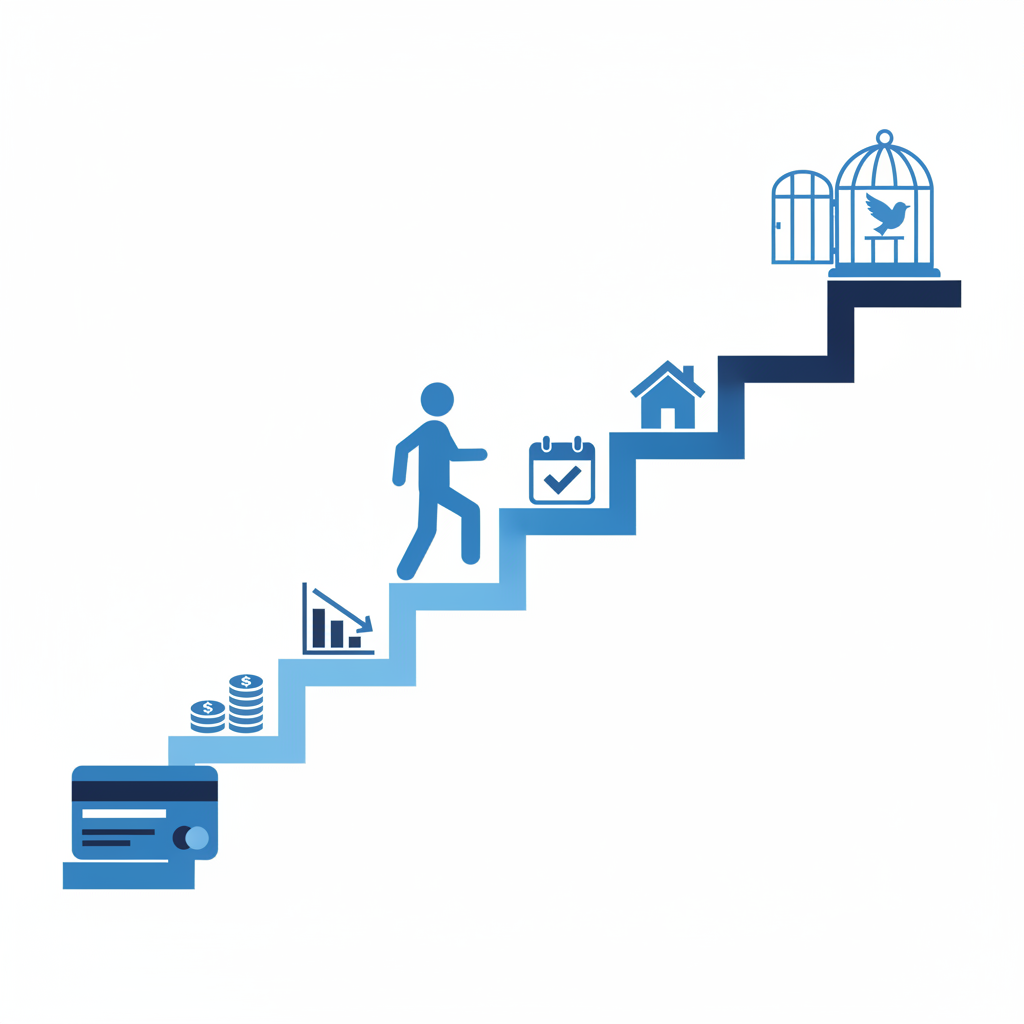
- List every card: balance, APR, minimum payment
- Stop charging new expenses to cards you’re paying off
- Build a budget — find at least $100–$300/month to redirect to debt
- Choose avalanche (highest APR first) or snowball (smallest balance first)
- Call issuers to negotiate rates, or transfer to a 0% card
- Apply windfalls and extra income directly to your target balance
- If overwhelmed, contact a nonprofit credit counselor — not a settlement company
🧮 Build Your Personalized Debt Payoff Plan
Use our calculators to model different strategies and find the fastest path out.
Frequently Asked Questions
Q: How do I get out of credit card debt fast?
A: Stop adding new charges, pay more than the minimum every month, target your highest-rate card first, and consider a 0% balance transfer or rate negotiation to reduce interest costs while you pay down the balance.
Q: What is the best strategy to get out of credit card debt?
A: The debt avalanche (highest rate first) saves the most money. The debt snowball (smallest balance first) builds momentum. Either works — the key is consistency and paying more than the minimum each month.
Q: Should I consolidate my credit card debt?
A: Consolidation can help if you qualify for a lower interest rate than you’re currently paying. A balance transfer card or personal loan can reduce total interest. Only consolidate if you also stop adding new charges to the old cards.
Financial Disclaimer: The content on this page is for informational and educational purposes only. It does not constitute financial, legal, or credit advice. DebtToolbox is not a financial advisor. Always consult a qualified financial professional before making decisions about your debt or finances.