Learn what debt to income ratio means, how to calculate it, and why it matters when applying for a mortgage or loan.
Last Updated: March 2026
You’ve checked your credit score, saved for a down payment, and paid your bills on time for years. But when you apply for a mortgage, you get denied — because of a number you didn’t even know lenders were watching. That number is your debt-to-income ratio (DTI), and according to the National Association of Realtors, it’s the single most common reason mortgage applications get rejected. Understanding what it is, how it’s calculated, and how to improve it can make the difference between being approved and being turned away.
What Is Debt-to-Income Ratio?
Your debt-to-income ratio is exactly what it sounds like: the percentage of your gross monthly income that goes toward debt payments. It’s a simple formula lenders use to answer one question — can you realistically afford another monthly payment?
Note that DTI looks at your gross income — what you earn before taxes — not what actually lands in your bank account. And it only counts debt obligations, not everyday expenses like groceries, utilities, or phone bills.
DTI = Total Monthly Debt Payments ÷ Gross Monthly Income × 100
Example: $1,800 in monthly debt ÷ $5,000 gross income = 36% DTIWhat counts as “debt” in this calculation: mortgage or rent, credit card minimum payments, car loans, student loans, personal loans, child support, and alimony. What doesn’t count: insurance premiums, utilities, groceries, streaming subscriptions, or any other regular bills that aren’t debt obligations.
DTI Ranges: Where Do You Stand?
Different lenders draw lines in different places, but here’s how DTI ratios are generally interpreted across the industry:
| DTI Range | What Lenders See | Status |
|---|---|---|
| 35% or below | You manage debt well. Strong approval odds, best rates. | Healthy |
| 36% – 43% | Acceptable to most lenders. May still qualify for good terms. | Manageable |
| 44% – 50% | Lenders get cautious. Fewer options, possibly higher rates. | Elevated |
| Above 50% | Most lenders will deny the application. Financial strain likely. | High Risk |
For mortgages specifically, the magic number is 43% — that’s the maximum DTI for most “qualified mortgages” under federal guidelines. Some government-backed loans (FHA, VA) allow higher ratios, but at 43% and above, your options narrow considerably.
Front-End vs. Back-End DTI
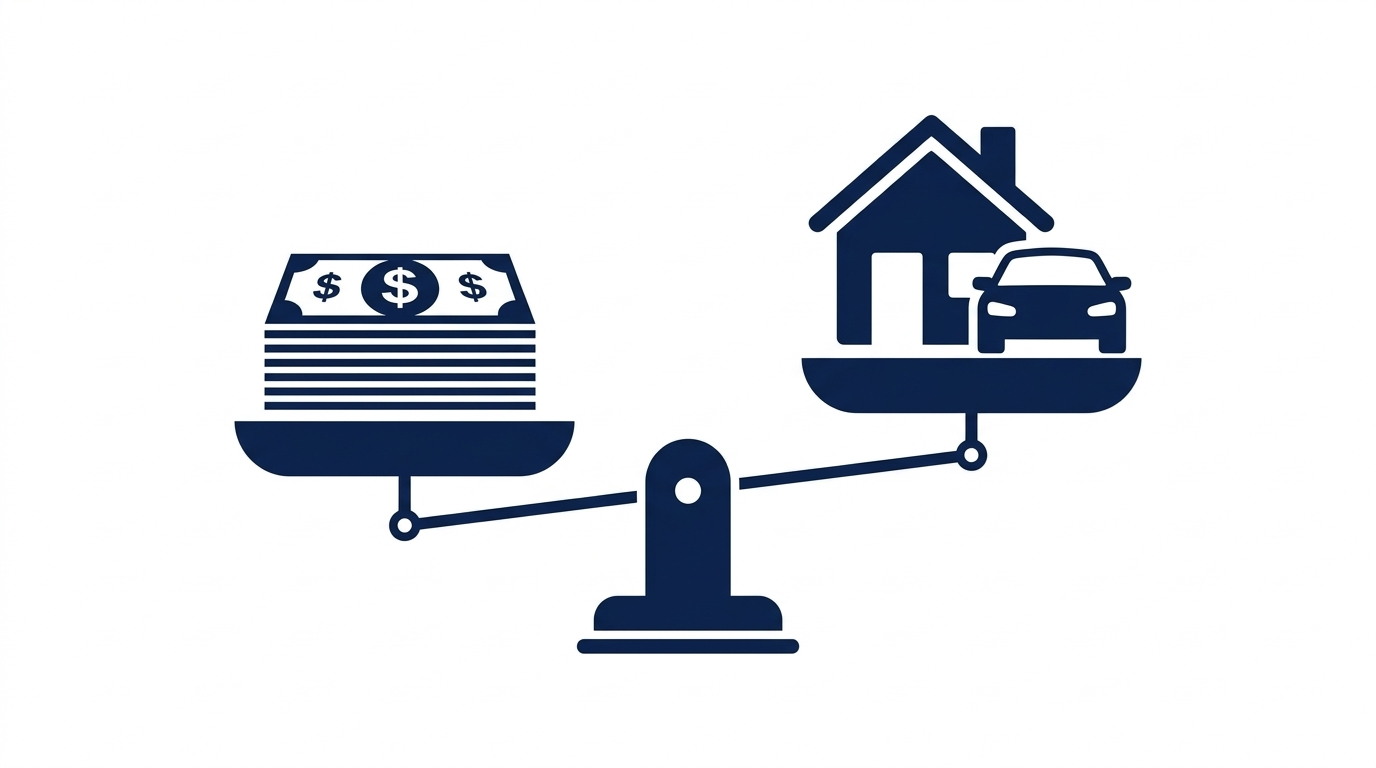
When you apply for a mortgage, lenders actually look at two separate DTI numbers — and both matter.
Front-end DTI (also called the housing ratio) measures only your housing costs — mortgage payment, property taxes, homeowner’s insurance, and HOA fees — as a percentage of gross income. Most lenders prefer this to stay at or below 28%.
Back-end DTI is the broader number: all your monthly debt obligations divided by gross income. This is the number most people mean when they say “DTI.” Lenders focus heavily on this one, and the guideline most follow is keeping it below 36%, though many will approve up to 43–45% depending on other factors.
This is sometimes called the 28/36 rule — keep housing costs under 28% of gross income, and total debt under 36%. It’s not a hard legal requirement, but it’s a widely used benchmark among conventional lenders.
DTI Affects More Than Just Mortgage Approval
Most people only think about DTI when buying a home, but lenders check it for car loans, personal loans, and even some credit card applications. A high DTI can mean denial, higher interest rates, or smaller loan amounts across the board.
There’s also a personal finance angle beyond borrowing. If more than half your income goes toward debt payments, you have very little cushion for emergencies, savings, or unexpected expenses. A DTI above 50% isn’t just a lending problem — it’s a sign your financial situation needs attention.
One important nuance: DTI does not directly affect your credit score. Lenders calculate it themselves when you apply; it doesn’t show up on your credit report. But the debts that make up your DTI do appear there, and paying them down improves both your credit utilization and your ratio at the same time.
How to Lower Your Debt-to-Income Ratio
There are only two levers: reduce your debt or increase your income. Here’s how to approach each:
- Pay off small balances completely. Eliminating a loan removes its monthly payment from your DTI calculation entirely. A $150/month car payment gone is worth more to your ratio than putting $150 extra toward a large mortgage balance.
- Pay down credit card balances. Credit cards count their minimum payment in your DTI. Reducing your balance lowers the minimum, which lowers your ratio. Paying the balance to zero removes it entirely.
- Avoid taking on new debt before applying. Every new monthly obligation — even a BNPL plan — raises your DTI. If you’re planning to apply for a mortgage or major loan, don’t open new credit accounts for several months beforehand.
- Refinance or consolidate to lower monthly payments. If you can refinance a loan at a lower rate or over a longer term, the reduced monthly payment lowers your DTI. Just be aware that a longer term means more total interest paid — this is a borrowing strategy, not necessarily a savings strategy.
- Increase your gross income. A side gig, raise, or second job raises the denominator in the DTI equation. Even a modest income increase can shift your ratio enough to qualify. Lenders generally want this income to be stable and documented, so freelance income may need a track record to count.
If you’re applying for a mortgage in the near future, prioritize eliminating small monthly obligations first — they have the fastest impact on your ratio per dollar spent.
📋 DTI Quick Reference
- DTI = monthly debt payments ÷ gross monthly income × 100
- Include: rent/mortgage, credit card minimums, car/student/personal loans
- Exclude: utilities, groceries, insurance, subscriptions
- 35% or below = healthy | 36–43% = acceptable | Above 50% = high risk
- For qualified mortgages: DTI must be 43% or below
- DTI does not directly affect your credit score
- Lower it by eliminating small debts, paying down credit cards, or increasing income
🧮 Calculate Your DTI Right Now
Enter your monthly debts and income to see exactly where you stand — and what you’d need to improve.
Frequently Asked Questions
Q: What is a good debt-to-income ratio?
A: A DTI of 36% or below is considered healthy. Between 36–43% is a caution zone. Above 43%, most mortgage lenders will not approve you, and your debt load may be unsustainable.
Q: Does credit card debt affect my debt-to-income ratio?
A: Yes. Lenders include your minimum monthly credit card payments when calculating your DTI. High credit card balances can disqualify you for mortgages or other loans even if your credit score is good.
Q: How can I lower my debt-to-income ratio?
A: Either increase your income or reduce your monthly debt payments. Paying down credit card balances, refinancing loans at lower rates, or consolidating debt can all lower your DTI over time.
Financial Disclaimer: The content on this page is for informational and educational purposes only. It does not constitute financial, legal, or credit advice. DebtToolbox is not a financial advisor. Always consult a qualified financial professional before making decisions about your debt or finances.