Last Updated: March 2026
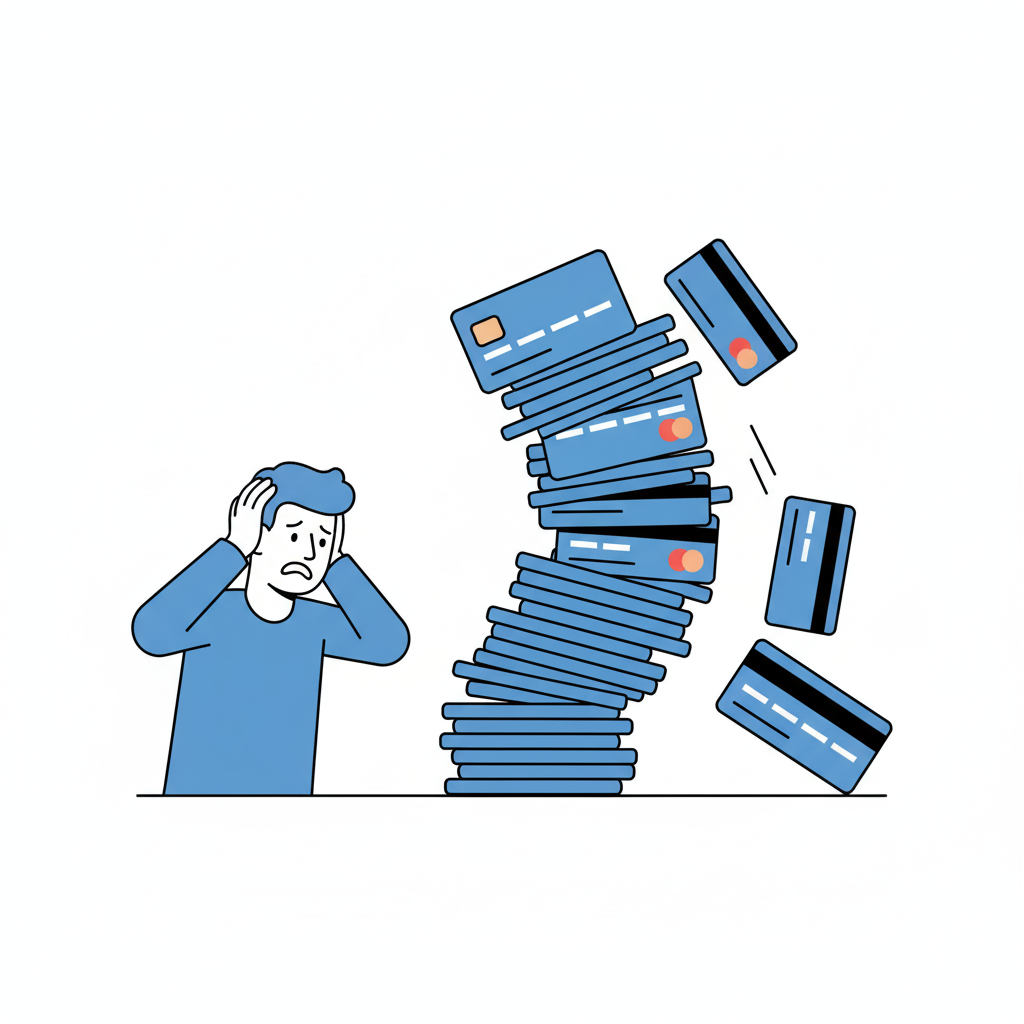
There’s a particular kind of stress that comes with credit card debt that feels out of control — the kind where you avoid opening statements, dread the end of the month, and aren’t sure which bill to pay first. If that sounds familiar, you’re in the majority. According to Bankrate, 64% of Americans with credit card debt have delayed major financial decisions because of it. The good news is that feeling out of control and being out of options are two very different things.
Face the Full Picture — All of It
The worst thing you can do when debt feels overwhelming is avoid looking at it. Avoidance doesn’t freeze the balance — interest keeps compounding whether you open the statement or not. The first step is to write everything down: every card, every balance, every interest rate, every minimum payment due date.
This exercise is uncomfortable. Most people find the total is higher than they’d estimated. But knowing the real number gives you something to work with. You can’t make a plan for a number you’re pretending doesn’t exist.
Once everything is listed, you’ll likely notice that a few cards have significantly higher rates than others. That information will drive every decision that follows.
Stop Adding to the Balance
You cannot pay down a balance that keeps growing. Before any payoff strategy can work, you need to stop using the cards you’re trying to pay off — or at minimum, stop adding charges you can’t pay off in the same billing cycle.
This doesn’t mean cutting up all your cards. It means being intentional. Switch everyday purchases to a debit card or cash. Remove saved credit card numbers from online shopping sites. Put the physical card somewhere inconvenient. None of this requires dramatic sacrifice — it just requires making the friction of spending slightly higher.
Even one month of not adding new charges gives the balance a chance to actually go down instead of staying flat or growing.
Look for Ways to Reduce the Interest Rate
At 20–22% APR, a large portion of every payment you make goes to interest rather than reducing your principal. Cutting the rate — even temporarily — dramatically changes the math.
There are several ways to do this:
- Call your card issuer and ask. This works more often than most people expect. If you’ve been a customer for a while and have a decent payment history, a 5-minute phone call could result in a lower rate. There’s no downside to asking.
- Apply for a balance transfer card. Many cards offer 0% APR on transferred balances for 12–21 months. Even with a 3–5% transfer fee, you could save significantly on interest and make real progress on the principal. This works best if you have a plan to pay down the balance during the promotional period.
- Look into a debt consolidation loan. Personal loan rates are typically much lower than credit card APRs. Rolling multiple card balances into a single fixed-rate loan simplifies repayment and reduces total interest — as long as you don’t use the freed-up credit card space to accumulate new debt.
Pick a Payoff Strategy and Commit to It
Once you’ve stopped adding debt and found ways to reduce the rate, it’s time to pick a direction and stick to it. There are two proven approaches:
- Debt avalanche: Pay minimums on all cards. Direct every extra dollar to the card with the highest interest rate. Once that’s paid off, roll the full payment to the next highest-rate card. This saves the most money in interest over time.
- Debt snowball: Pay minimums on all cards. Direct every extra dollar to the card with the smallest balance. The quick win of eliminating a card motivates you to keep going. This costs slightly more in interest but works well if motivation is the challenge.
Neither approach requires a large income or a perfect budget. They just require consistency. The momentum builds as each card gets eliminated and that freed-up payment rolls into the next one.
Find Extra Money to Throw at the Debt
The speed at which you pay off debt is directly tied to how much you can put toward it above the minimums. Even an extra $50 or $100 per month makes a meaningful difference over time. Here are some concrete ways to find that money:
- Cut subscriptions and recurring charges. Review your last three months of bank and card statements. Most people find $50–$150 per month in services they barely use — streaming platforms, unused gym memberships, app subscriptions.
- Redirect windfalls. Tax refunds, work bonuses, and gifts are debt payoff opportunities. Even a $500 lump-sum payment can shave months off a payoff timeline.
- Sell things you no longer need. A few hours listing items on Facebook Marketplace or eBay can generate a one-time payment against a balance.
- Increase income temporarily. A part-time gig, freelance project, or weekend work is genuinely one of the fastest ways to accelerate payoff. An extra $300/month directed entirely at debt dramatically shortens the timeline.
Know When to Get Professional Help
If you’re juggling payments between creditors, regularly missing due dates, or have received calls from collections agencies, it may be time to talk to a professional — specifically a nonprofit credit counseling agency.
Nonprofit credit counselors offer free or low-cost consultations and can help you in several ways. They can review your full picture and suggest options you may not know about. They can negotiate with your creditors directly to reduce interest rates or set up structured payment plans. And they can set you up on a debt management plan — a formalized repayment program where you make one monthly payment to the agency and they distribute it to your creditors.
Be cautious of for-profit debt settlement companies that advertise reducing what you owe. These companies typically require you to stop making payments, which damages your credit and can result in lawsuits from creditors. Nonprofit counseling is a different and generally safer option.
Key Takeaways
- Write down every balance, rate, and minimum payment — avoidance doesn’t stop the interest
- Stop adding new charges to the cards you’re trying to pay off
- Call your issuer and ask for a lower rate — it costs nothing and often works
- A balance transfer or consolidation loan can cut your interest rate significantly
- Pick either the avalanche or snowball method and stick with it consistently
- Finding even $50–$100 extra per month makes a real difference to your payoff date
- Nonprofit credit counseling is free and can help if payments feel impossible to manage
See Your Payoff Date Right Now
Enter your balance and what you can pay each month — we’ll show you exactly when you’ll be debt-free.
Open Debt Payoff Calculator →Frequently Asked Questions
Q: What should I do first if my credit card debt feels out of control?
A: Write down every balance, interest rate, and minimum payment. Seeing the full picture is the first step — you can’t make a plan for a number you’re avoiding. Then stop adding new charges and look for ways to reduce your interest rate.
Q: Is nonprofit credit counseling free?
A: Initial consultations at nonprofit credit counseling agencies are typically free. If you enroll in a debt management plan, there may be a small monthly fee (often $25–$50). This is different from for-profit debt settlement companies, which charge much more.
Q: What is a debt management plan?
A: A debt management plan (DMP) is a structured repayment program arranged through a nonprofit credit counseling agency. The agency negotiates with your creditors for lower rates and consolidates your payments into one monthly amount. It typically takes 3–5 years to complete.
Related Resources
→ How to Get Out of Credit Card Debt
→ How Much Credit Card Debt Is Too Much
Financial Disclaimer: The content on this page is for informational and educational purposes only. It does not constitute financial, legal, or credit advice. DebtToolbox is not a financial advisor. Always consult a qualified financial professional before making decisions about your debt or finances.