Last Updated: March 2026
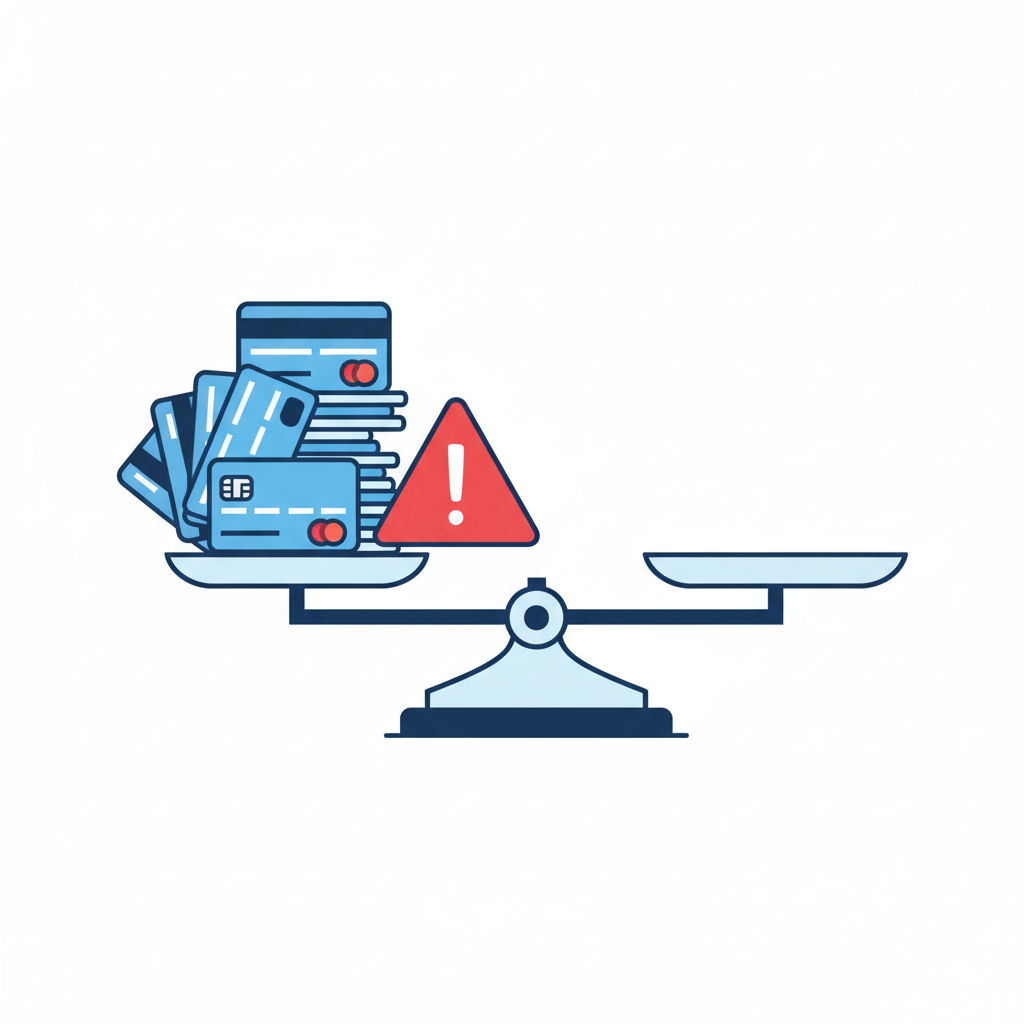
Americans are now carrying $1.28 trillion in credit card debt — the highest total on record. The average balance per cardholder is around $6,523, and nearly half of all cardholders carry a balance from month to month. But those numbers don’t answer the real question: how much is too much for you? There’s no single answer, but there are three reliable benchmarks that can tell you exactly where you stand.
Credit Utilization Ratio: Stay Below 30%
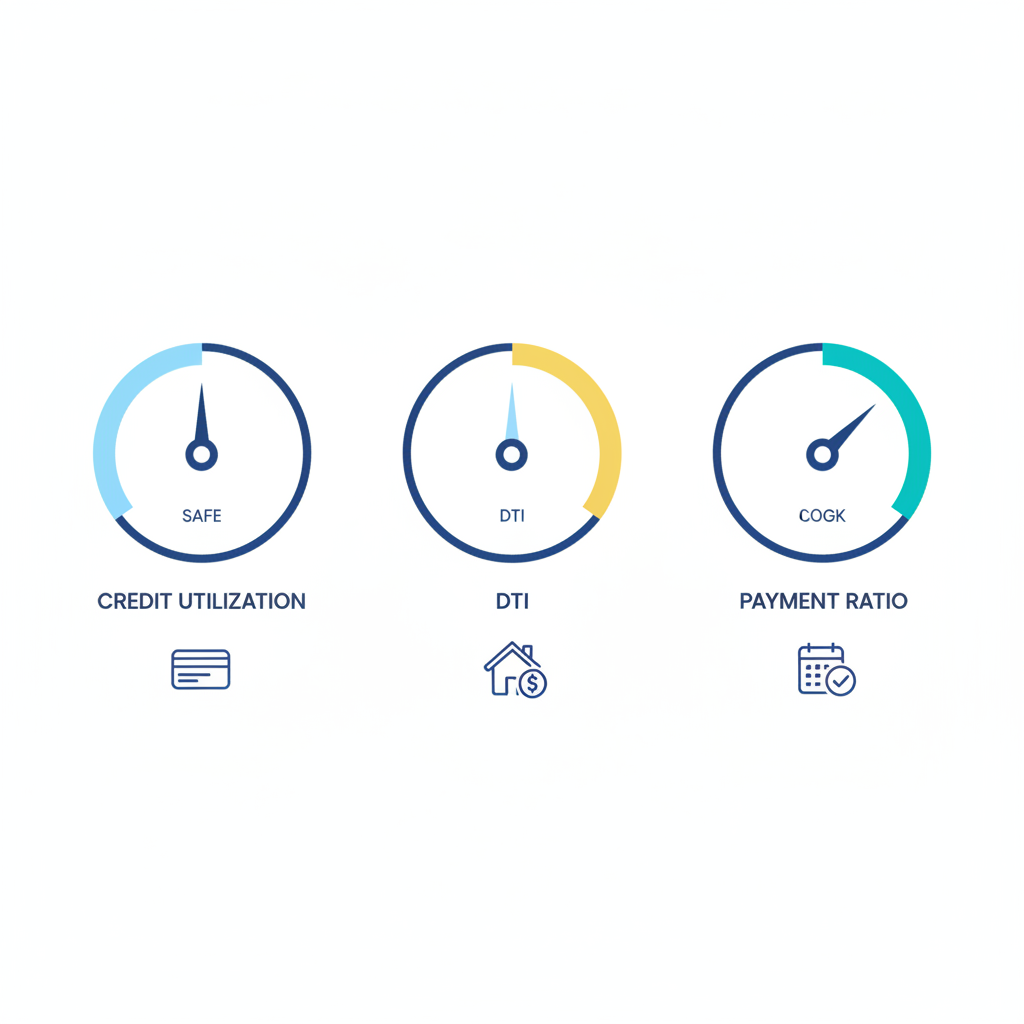
Your credit utilization ratio measures how much of your available credit limit you’re currently using. It’s calculated by dividing your total credit card balances by your total credit limits — and it accounts for roughly 30% of your credit score.
The widely accepted threshold is 30%. If you have a combined credit limit of $10,000 across all your cards and you’re carrying $3,000 in balances, you’re right at that line. Push it to $6,000 and you’re at 60% — a level that signals financial strain to lenders and will likely drag down your credit score.
For the best credit score outcomes, many financial experts recommend staying under 10%. But even crossing 30% is a useful early warning that your balances may be getting out of hand.
Debt-to-Income Ratio: The 36% Rule
Your debt-to-income ratio (DTI) compares your total monthly debt payments to your gross monthly income. It includes not just credit cards but also rent or mortgage, car payments, student loans, and any other recurring debt obligations.
A DTI of 36% or below is generally considered healthy. Between 36% and 43%, you’re in a caution zone — manageable, but tight. Above 43%, most mortgage lenders won’t approve you, and it’s a strong signal that your debt load is unsustainable for your income level.
Here’s a simple example: if your gross monthly income is $5,000 and your total monthly debt payments add up to $2,200, your DTI is 44%. That’s a red flag — and it tells you something important before a lender does.
Credit Card Debt Ratio: The 10% Rule
This one is specific to credit cards and often gets overlooked. Your credit card debt ratio measures how much of your take-home pay goes toward minimum credit card payments each month. Unlike the DTI — which uses gross income — this ratio uses your net income, because that’s the money you actually have available to pay bills.
The general guideline: credit card minimum payments should not exceed 10% of your monthly net income. If you take home $3,500 per month and your combined minimum payments on all cards total more than $350, your credit card debt is starting to crowd out other expenses — groceries, utilities, savings, and emergencies.
When that ratio climbs above 15%, you’re likely juggling payments, skipping bills, or dipping into savings just to keep accounts current. That’s the territory where debt becomes genuinely unmanageable.
Behavioral Red Flags That Go Beyond the Numbers
Sometimes the math looks okay on paper but your day-to-day reality tells a different story. These are the signs that your credit card debt has crossed into problem territory — regardless of what the ratios say:
- You’re only making minimum payments. Minimum payments are designed to keep accounts open, not to pay down your balance. At a 21% APR, a $5,000 balance paid with minimums only could take over seven years to eliminate — and cost thousands in interest.
- You’re using credit to cover essentials. Groceries, gas, utilities, medical bills — if these are going on a credit card because your checking account can’t cover them, your income and spending are out of balance.
- You don’t know your total balance. Avoiding the number is a form of financial avoidance. If you haven’t checked your total credit card balance in the last 30 days, there’s a reason for that.
- You feel anxious about your mail or notifications. Debt stress is real. Chronic worry about finances is itself a signal worth paying attention to.
- You’ve taken a cash advance. Cash advances come with immediate interest — no grace period — and fees on top. Using one to cover basic expenses is a sign of serious cash flow problems.
What “Average” Debt Actually Means
The average American credit card balance is $6,523, according to TransUnion’s Q3 2025 data. But that average includes people who pay their balance in full each month — meaning they technically carry $0 in revolving debt. Among cardholders who actually carry a balance, the average unpaid balance is closer to $7,886, according to LendingTree’s analysis of over 400,000 credit reports.
The point isn’t that $7,000 in debt is fine because it’s “average.” The point is that average debt levels in the U.S. are already high enough that millions of people are paying significant amounts in interest every month without meaningfully reducing their principal.
At a 21% APR, $7,000 in credit card debt generates roughly $122 in interest every single month. That’s $1,470 per year that goes entirely to the lender — not one dollar of which reduces what you owe.
What to Do If Your Debt Is Too High
Recognizing the problem is step one. Here’s where to go from there:
- Calculate your three ratios. Credit utilization, DTI, and credit card debt ratio. Write them down. Numbers you can see are numbers you can act on.
- Stop adding to the balance. Before you can pay debt down, you need to stop it from growing. Use cash or a debit card for everyday purchases while you work on existing balances.
- Choose a payoff strategy. The debt avalanche (highest interest first) costs the least overall. The debt snowball (smallest balance first) builds momentum faster. Either one beats paying minimums indefinitely.
- Explore lower-rate options. A balance transfer to a 0% APR card or a lower-rate personal loan can significantly reduce how much of your payment goes to interest. But these tools only help if spending is under control first.
- Call your card issuer. If you’ve been a reliable customer, there’s a real chance they’ll lower your rate when asked. Studies suggest that the majority of cardholders who ask get some form of rate reduction.
Key Takeaways
- Keep your credit utilization ratio below 30% to protect your credit score
- A debt-to-income ratio above 43% is a red flag for lenders — and for your own financial health
- Minimum credit card payments should stay under 10% of your net monthly income
- The average American carries $6,523 in credit card debt — but “average” isn’t the same as “okay”
- Behavioral signs like only making minimums or using credit for essentials can signal a problem before the math does
- Tools like balance transfers, rate negotiations, and payoff calculators can help once you know where you stand
Find Out What Your Debt Is Actually Costing You
Use our free calculators to see your real numbers — utilization, payoff timeline, and total interest.
Open Debt Payoff Calculator →Frequently Asked Questions
Q: How much credit card debt is considered a lot?
A: It depends on your income. The key benchmarks are: keep credit utilization below 30%, keep your debt-to-income ratio below 36%, and keep minimum payments under 10% of your monthly take-home pay. If any of these are exceeded, your debt level may be too high.
Q: What is the average American credit card debt?
A: As of Q3 2025, the average credit card balance is $6,523 according to TransUnion. Among cardholders who actually carry a balance (don’t pay in full), the average is closer to $7,886.
Q: At what point should I seek help for credit card debt?
A: If you’re only making minimum payments, using credit for essentials, or juggling payments between creditors, it’s time to take action. A nonprofit credit counseling agency can review your situation for free and suggest options.
Related Resources
Financial Disclaimer: The content on this page is for informational and educational purposes only. It does not constitute financial, legal, or credit advice. DebtToolbox is not a financial advisor. Always consult a qualified financial professional before making decisions about your debt or finances.