Learn how a balance transfer works step by step and how to use it to pay off credit card debt faster.
Last Updated: March 2026
A balance transfer sounds simple enough — move debt from one card to another. But the details matter a lot. Done right, it can save you hundreds or even thousands in interest and cut months off your payoff timeline. Done carelessly, you can end up paying fees, losing the promotional rate, and finishing in worse shape than when you started. This guide walks through exactly how balance transfers work, step by step, and what to watch out for along the way.
What a Balance Transfer Actually Is
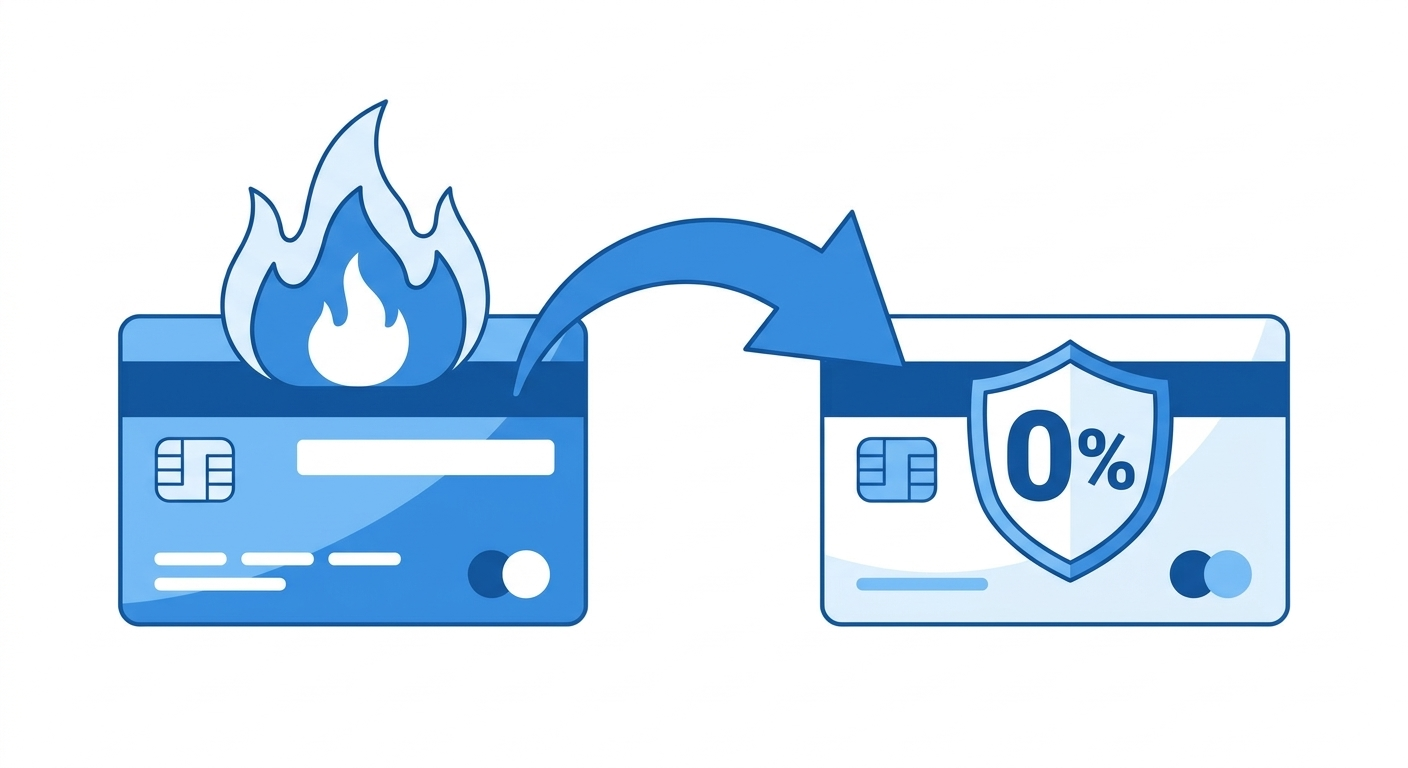
A balance transfer moves existing credit card debt from one card — or sometimes multiple cards — to a new card, typically one offering a lower interest rate. The most common version involves a 0% introductory APR that lasts anywhere from 12 to 21 months. During that window, none of your payment goes toward interest. Every dollar goes straight to the principal.
To put that in concrete terms: if you have $5,000 on a card charging 24% APR, you’re paying roughly $100 per month in interest alone. Transfer that balance to a 0% card, and that same $100 reduces your actual debt instead. Over 18 months of a promotional period, the difference can easily exceed $1,500 in savings.
The debt doesn’t disappear — you still owe everything you owed before. But you’ve bought yourself time to pay it down without the interest clock running. That’s the entire value of the tool.
How to Do a Balance Transfer
Know your current balance and APR
Pull up your latest statement on every card you’re considering transferring. You need the exact balance and interest rate for each. This tells you how much interest you’re losing per month right now — and how urgently a transfer makes sense.
Shop for the right balance transfer card
Look for cards with the longest 0% promotional period — ideally 15 to 21 months. Compare the balance transfer fee (usually 3–5% of the amount transferred) and what APR kicks in after the promo ends. The post-promo rate matters if there’s any chance you won’t pay it off in time.
Check your credit score before applying
Most balance transfer cards with strong 0% offers require a credit score of 670 or higher. Applying triggers a hard inquiry that can temporarily lower your score by a few points. If your score is borderline, consider improving it first to qualify for the best terms.
Apply and request the transfer
Many issuers let you request the transfer directly in the application — you provide the old card’s account number and the amount to transfer. Others process it after approval. Either way, the new card pays off your old one; the balance moves, not cash.
Keep paying your old card until the transfer clears
Transfers can take anywhere from a few days to two weeks. During that time, your old card still has a balance. Keep making at least the minimum payment to avoid late fees or damage to your credit. Don’t assume the transfer went through until you confirm it on both accounts.
Pay down the balance before the promo period ends
Divide your transferred balance by the number of months in the promotional period — that’s the monthly payment you need to clear it before interest kicks in. Set up autopay for at least the minimum to protect your rate, but push to pay more every month.

Balance Transfer Fees — Are They Worth It?
Most cards charge a balance transfer fee of 3% to 5% of the amount you move. On a $5,000 transfer, that’s $150 to $250 added to your balance upfront. That fee is almost always worth paying — but it’s worth confirming with math before you commit.
Here’s how to think about it: if you’re paying 22% APR on $5,000, you’re paying roughly $90/month in interest. A $200 transfer fee is recovered in about two months of interest savings. Everything after that is pure savings — and over a 15-month promo period, you’d save over $1,000 compared to making the same payments on the original card.
The math flips if your current rate is already low, or if you can’t commit to paying it off before the promo ends. In those cases, the fee might not be justified. That’s why running the numbers before applying matters.
The Pitfalls Most People Don’t See Coming
Balance transfers work well when executed carefully. Here are the most common mistakes that turn a good strategy into a costly one:
- Missing the promo deadline. When the 0% period ends, your remaining balance reverts to the card’s standard APR — often 20–29%. The card company won’t send a reminder. Mark the date yourself, set a calendar alert 60 days before, and know your monthly target.
- Making late payments. A single missed payment can void your promotional rate immediately, depending on the card’s terms. Set up autopay for the minimum the day you open the account — you can always pay more manually.
- Using the old card again. Once you transfer the balance, your old card has available credit. Using it for new purchases puts you back in the same position — except now you’re managing two balances instead of one.
- Making purchases on the new card. Many balance transfer cards apply the 0% rate only to transferred balances, not new purchases. New spending might accrue interest from day one at the standard rate.
- Transferring more than you can realistically pay off. If the balance is too large to eliminate during the promo period, you’ll still be better off than before — but you’ll face interest on the remainder. Know your number going in.
When a Balance Transfer Makes Sense — and When It Doesn’t
A balance transfer is a strong move if: you have credit card debt at a high APR, you qualify for a card with a meaningful 0% offer, and you have a realistic plan to pay it off during the promo period. The higher your current rate and the more disciplined your payoff plan, the more you benefit.
It makes less sense if your credit score is below 670 (you may not qualify for the best offers), if your debt is so large that you can’t pay it off within 21 months even with aggressive payments, or if your current APR is already relatively low.
For debt that’s too large for a single transfer period, a debt consolidation loan might be a better fit — it gives you a fixed term and rate over 3–5 years without the promo-expiration pressure. But for most people carrying $3,000 to $10,000 in credit card debt at 20%+ APR, a balance transfer is one of the most effective and accessible tools available.
📋 Balance Transfer Checklist
- Know your current balance and APR before applying
- Look for 0% offers with 15–21 month windows and low transfer fees
- Check your credit score — most good offers require 670+
- Keep paying your old card until the transfer confirms
- Divide your balance by the promo months — that’s your monthly target
- Set autopay immediately to protect your 0% rate
- Don’t use the old card or make purchases on the new one
🧮 Is a Balance Transfer Worth It for You?
Use our calculators to compare your current interest costs against what a transfer could save.
Frequently Asked Questions
Q: What is a balance transfer fee?
A: A balance transfer fee is typically 3–5% of the amount transferred, with a minimum of around $5–$10. For example, transferring $5,000 with a 3% fee costs $150 upfront — but can save hundreds in interest if you pay it off during the 0% period.
Q: How long does a balance transfer take?
A: Most balance transfers complete within 5–10 business days, though it can take up to 3 weeks depending on the issuer. Keep making payments on your old card until the transfer is confirmed.
Q: What happens if I don’t pay off the balance before the 0% period ends?
A: Any remaining balance starts accruing interest at the card’s regular APR, which can be 20–29%. Always have a plan to pay off the full balance before the promotional period ends.
Financial Disclaimer: The content on this page is for informational and educational purposes only. It does not constitute financial, legal, or credit advice. DebtToolbox is not a financial advisor. Always consult a qualified financial professional before making decisions about your debt or finances.